

For decades, most health, fitness, and productivity research has been built on the assumption that all human bodies work the same way. The default model? A 24-hour cycle where the body resets each morning, ready to perform consistently day after day.
But here's the problem: that model was designed around male biology.
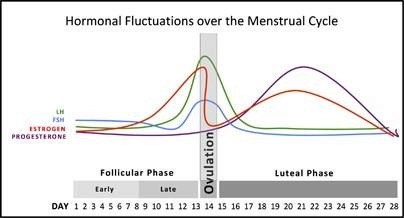
Women's bodies don't operate on a simple 24-hour loop. They run on a longer, roughly 28-day rhythm that shifts everything—energy, metabolism, mood, and even how the brain processes information.
This isn't a flaw. It's simply a different operating system. And when we ignore it, we set women up for frustration, self-blame, and strategies that were never designed for their biology in the first place.
Myth 1: Everyone Runs on a 24-Hour Clock
Men's hormones—particularly testosterone—follow a predictable daily pattern. They wake up with levels at their peak, which then gradually decline through the day and reset overnight. This makes it easier to maintain a steady routine.
Women experience this daily rhythm too, but it sits inside a much larger monthly cycle. What works beautifully in week two of your cycle may feel impossible in week four—not because of a lack of effort, but because your body is in a completely different biological state.
Myth 2: Your Body Needs the Same Amount of Food Every Day
The popular idea of eating the same calories daily doesn't account for what actually happens inside a woman's body. During the second half of the cycle (after ovulation), body temperature rises and the metabolism speeds up. Your body genuinely needs more fuel during this time—sometimes up to 10% more.
Ignoring this often leads to intense cravings, low energy, or the feeling that your "discipline" has suddenly vanished. It hasn't. Your biology has simply shifted.
Myth 3: Hormones Are Just About Fertility
We've been taught to think of estrogen and progesterone as "reproductive hormones"—relevant only when discussing periods or pregnancy. This is a surprisingly narrow view.
These hormones are deeply involved in how the brain works. They influence memory, how we recognise emotions, and even how we process stress. They are whole-body regulators, not just fertility signals.
Myth 4: Focus and Mental Sharpness Are Always the Same
There's a quiet assumption that willpower and concentration should be constant—that a focused Tuesday should feel like any other focused Tuesday. Research tells a different story.
Studies show that memory and attention tend to peak in the days leading up to ovulation. During other phases, the same mental tasks may require noticeably more effort.
This isn't a weakness. It's a rhythm.
Myth 5: The Best Results Come from Doing the Same Thing Every Day
"Stay consistent" is the mantra of modern productivity and fitness culture. And for a body that resets every 24 hours, this makes sense.
But for a body that moves through distinct phases over a month, forcing the same routine every day can lead to diminishing returns—or outright burnout. True consistency for women may look more like matching effort to phase, rather than repeating identical actions regardless of biological context.
Myth 6: Stress Affects Everyone the Same Way
A demanding week, a strict diet, or an intense training block doesn't land the same way in every body. The interaction between stress hormones and the monthly hormonal shifts can amplify or dampen the impact of that stress.
What feels challenging but manageable for one person may quietly disrupt the delicate balance of another—not due to fragility, but due to a more complex system with more moving parts.
The Bigger Picture
None of this is about lowering expectations or making excuses. It's about accuracy.
When we measure women's performance against a biological model that was never theirs, we create a gap between effort and outcome that no amount of willpower can close. The issue isn't discipline. It's design.
Understanding this is the first step. What comes next is learning to work with the rhythm rather than against it.
That conversation is for another time.
For decades, most health, fitness, and productivity research has been built on the assumption that all human bodies work the same way. The default model? A 24-hour cycle where the body resets each morning, ready to perform consistently day after day.
But here's the problem: that model was designed around male biology.
Women's bodies don't operate on a simple 24-hour loop. They run on a longer, roughly 28-day rhythm that shifts everything—energy, metabolism, mood, and even how the brain processes information.
This isn't a flaw. It's simply a different operating system. And when we ignore it, we set women up for frustration, self-blame, and strategies that were never designed for their biology in the first place.
Myth 1: Everyone Runs on a 24-Hour Clock
Men's hormones—particularly testosterone—follow a predictable daily pattern. They wake up with levels at their peak, which then gradually decline through the day and reset overnight. This makes it easier to maintain a steady routine.
Women experience this daily rhythm too, but it sits inside a much larger monthly cycle. What works beautifully in week two of your cycle may feel impossible in week four—not because of a lack of effort, but because your body is in a completely different biological state.
Myth 2: Your Body Needs the Same Amount of Food Every Day
The popular idea of eating the same calories daily doesn't account for what actually happens inside a woman's body. During the second half of the cycle (after ovulation), body temperature rises and the metabolism speeds up. Your body genuinely needs more fuel during this time—sometimes up to 10% more.
Ignoring this often leads to intense cravings, low energy, or the feeling that your "discipline" has suddenly vanished. It hasn't. Your biology has simply shifted.
Myth 3: Hormones Are Just About Fertility
We've been taught to think of estrogen and progesterone as "reproductive hormones"—relevant only when discussing periods or pregnancy. This is a surprisingly narrow view.
These hormones are deeply involved in how the brain works. They influence memory, how we recognise emotions, and even how we process stress. They are whole-body regulators, not just fertility signals.
Myth 4: Focus and Mental Sharpness Are Always the Same
There's a quiet assumption that willpower and concentration should be constant—that a focused Tuesday should feel like any other focused Tuesday. Research tells a different story.
Studies show that memory and attention tend to peak in the days leading up to ovulation. During other phases, the same mental tasks may require noticeably more effort.
This isn't a weakness. It's a rhythm.
Myth 5: The Best Results Come from Doing the Same Thing Every Day
"Stay consistent" is the mantra of modern productivity and fitness culture. And for a body that resets every 24 hours, this makes sense.
But for a body that moves through distinct phases over a month, forcing the same routine every day can lead to diminishing returns—or outright burnout. True consistency for women may look more like matching effort to phase, rather than repeating identical actions regardless of biological context.
Myth 6: Stress Affects Everyone the Same Way
A demanding week, a strict diet, or an intense training block doesn't land the same way in every body. The interaction between stress hormones and the monthly hormonal shifts can amplify or dampen the impact of that stress.
What feels challenging but manageable for one person may quietly disrupt the delicate balance of another—not due to fragility, but due to a more complex system with more moving parts.
The Bigger Picture
None of this is about lowering expectations or making excuses. It's about accuracy.
When we measure women's performance against a biological model that was never theirs, we create a gap between effort and outcome that no amount of willpower can close. The issue isn't discipline. It's design.
Understanding this is the first step. What comes next is learning to work with the rhythm rather than against it.
That conversation is for another time.